

Box Breathing at Your Desk
A four-count breathing technique that takes four minutes and requires no special equipment or quiet space.
Practical methods including body scan, grounding, and focused awareness. We’ve tested these with real office schedules and they work.


You’re not going to meditate for an hour at your desk. That’s fine — you don’t need to. The truth is, five minutes is the sweet spot for busy people. It’s long enough to actually reset your nervous system, but short enough that you’ll actually do it.
We tested these techniques with real people in real offices. Accountants, project managers, HR staff — people with actual workdays. The techniques that stuck were the ones that work fast, feel natural, and don’t require special equipment or quiet rooms.

This one’s straightforward. Sit in your chair — doesn’t have to be fancy — and scan from your head down to your feet. You’re not trying to relax anything. You’re just noticing.
Start at the crown of your head. Notice the temperature. Any tension? Move to your face. Your jaw. Your shoulders. Keep going down. Most people find that halfway through, they notice they’re holding tension somewhere. Just by noticing, it starts to release.
The whole thing takes about five minutes if you move steadily. Don’t rush. Some days you’ll find tight spots, some days everything feels neutral. Both are fine. It’s not about achieving a state — it’s about getting present with what’s actually happening in your body right now.

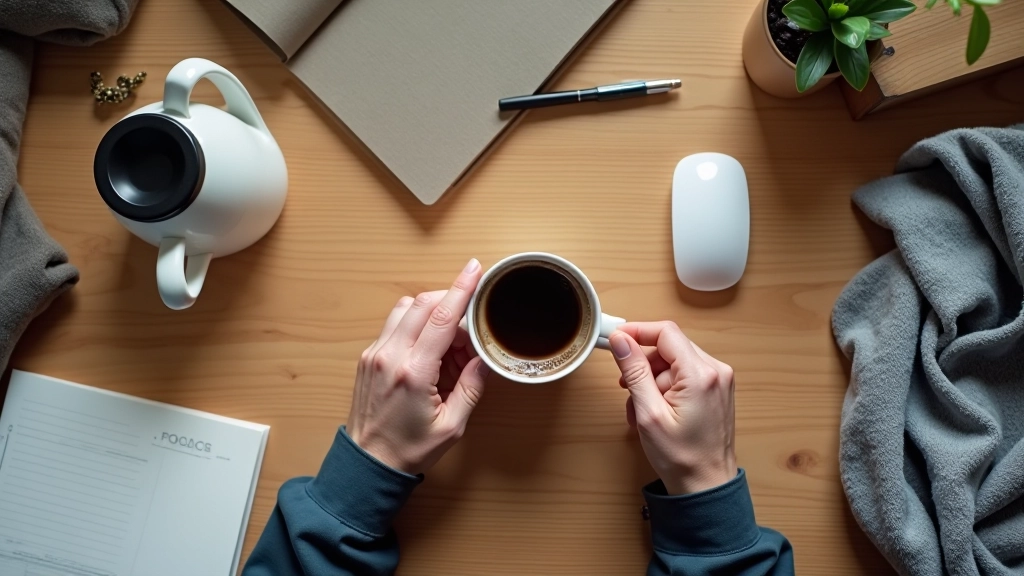
This one’s brilliant for when you’re stressed or your mind’s spinning. You use your senses to anchor yourself to the present moment. It’s tactile, so you’re literally touching things at your desk.
Notice five things you can see. Look around your desk or room. Actually name them — the keyboard, the coffee mug, the plant. Then four things you can touch. Pick them up, feel the texture. Three things you can hear. The hum of the computer, people talking, traffic outside. Two things you can smell. Coffee, paper, whatever’s nearby. One thing you can taste.
The whole process takes about five minutes and it’s incredibly effective for pulling yourself out of anxiety or racing thoughts. By the time you’re on the taste part, your nervous system has already shifted.
Pro tip: Keep this simple. You don’t need perfect answers. “I see my monitor” is fine. The goal isn’t observation — it’s engagement with right now.
You don’t need fancy breathing patterns. Breathe in for four counts, hold for four, out for four. That’s it. Do that for about five minutes and you’re done.
The reason this works is your nervous system responds to the rhythm. When you’re stressed, your breathing gets fast and shallow. By slowing it down deliberately, you’re telling your body that things are safe. It’s a direct signal.
Some people prefer to extend the exhale — four in, four hold, six out. The longer exhale activates the parasympathetic nervous system even more. Try both and see what feels right.
Inhale for 4 counts
Hold for 4 counts
Exhale for 4 counts
Repeat 5 minutes

This article provides educational information about meditation techniques for workplace wellness. These methods are designed to support stress management and mindfulness practices. They’re not a substitute for professional mental health care or medical treatment. If you’re experiencing anxiety, depression, or other mental health concerns, please consult with a qualified healthcare provider. Everyone’s experience with meditation is different — what works for one person might need adjustment for another. Start slowly and listen to your body.
The secret to actually using these isn’t willpower — it’s habit stacking. Do your breathing technique right after you pour your coffee. Do the body scan before you open your email. The 5-4-3-2-1 grounding when you feel stress rising. Attach them to things you already do and they become automatic.
Start with one technique. Pick the one that sounds easiest. Do it for a week. You’ll notice you’re calmer, you’re thinking clearer, and you’re not as reactive to things that would normally stress you. That’s when you know it’s working.
Five minutes. That’s all you need. Not tomorrow. Today. You’ve got this.